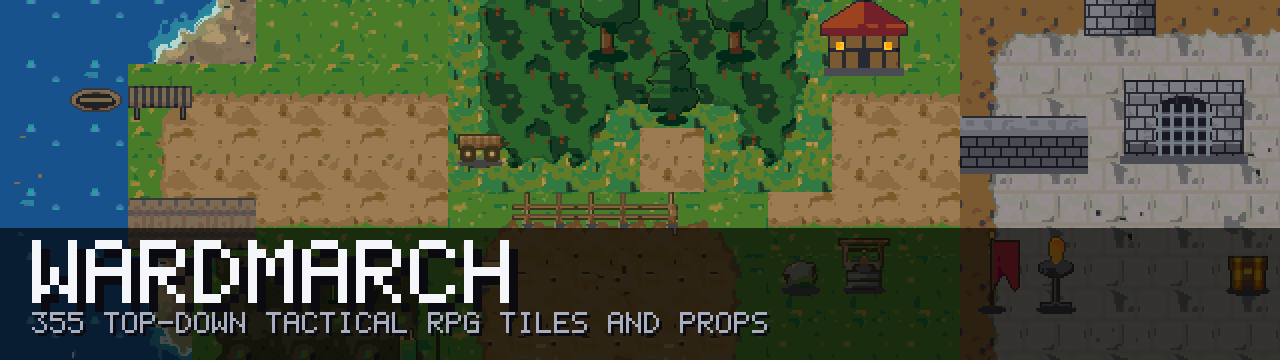
Wardmarch - 355 Top-Down Tactical RPG Tiles & Props - 32x32 Pixel Art
A downloadable asset pack
Wardmarch - 355 Top-Down Tactical RPG Tiles & Props - 32x32 Pixel Art
12 autotiling terrains, 115 props, one 147-colour GBA palette. Tiled .tsx included - paint instead of wiring.
355 original 32x32 pixel art tiles and props - a top-down tactical RPG
tileset whose terrain autotiles the moment you import it, for the kind of map
where a unit walks four squares and stops at a river.
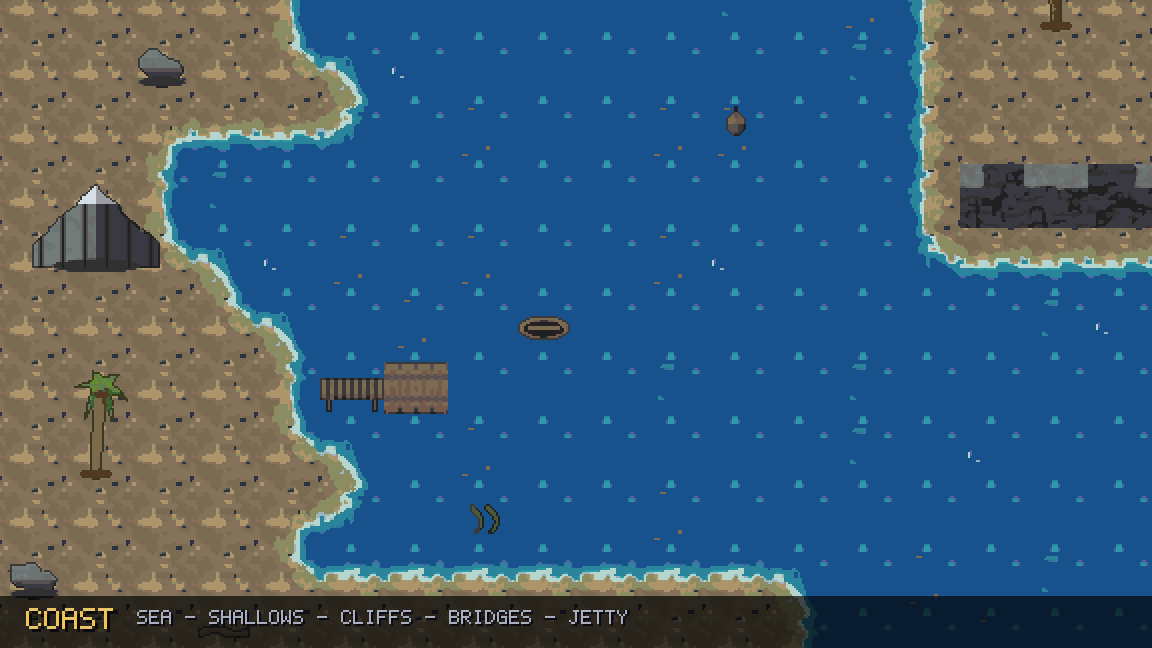
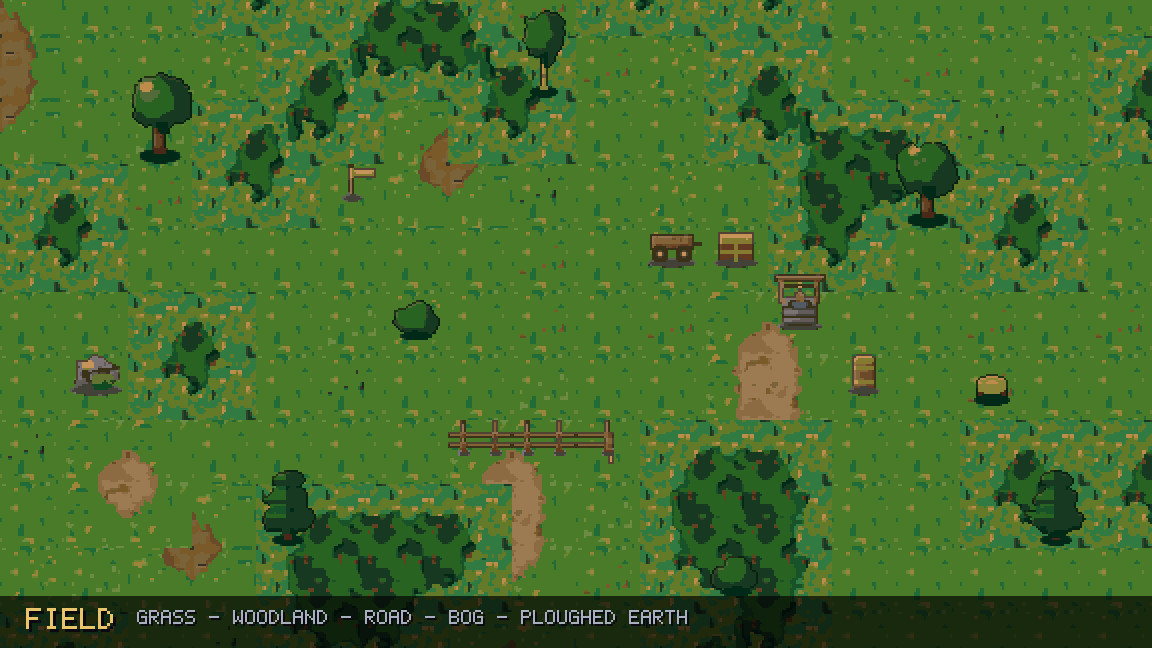
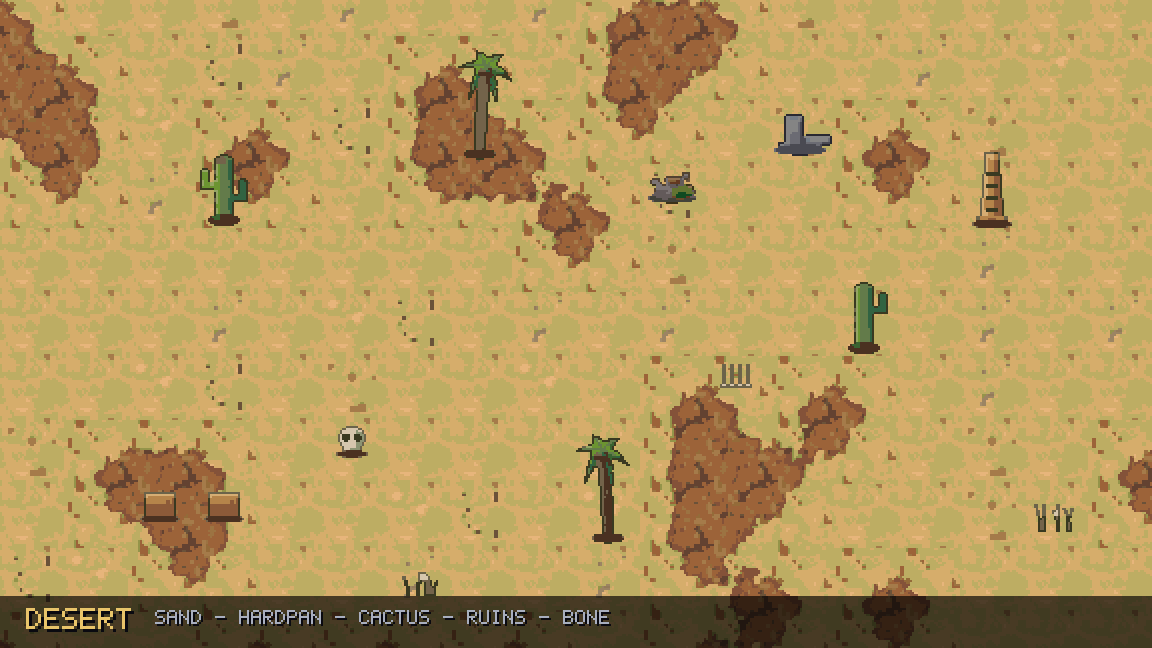
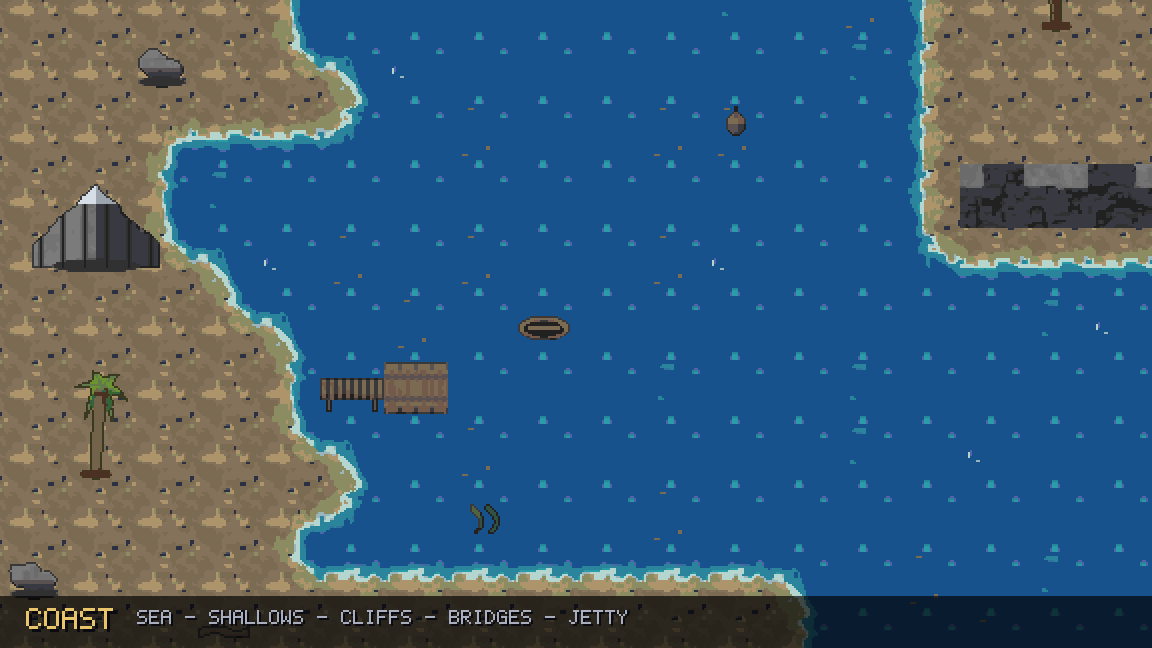
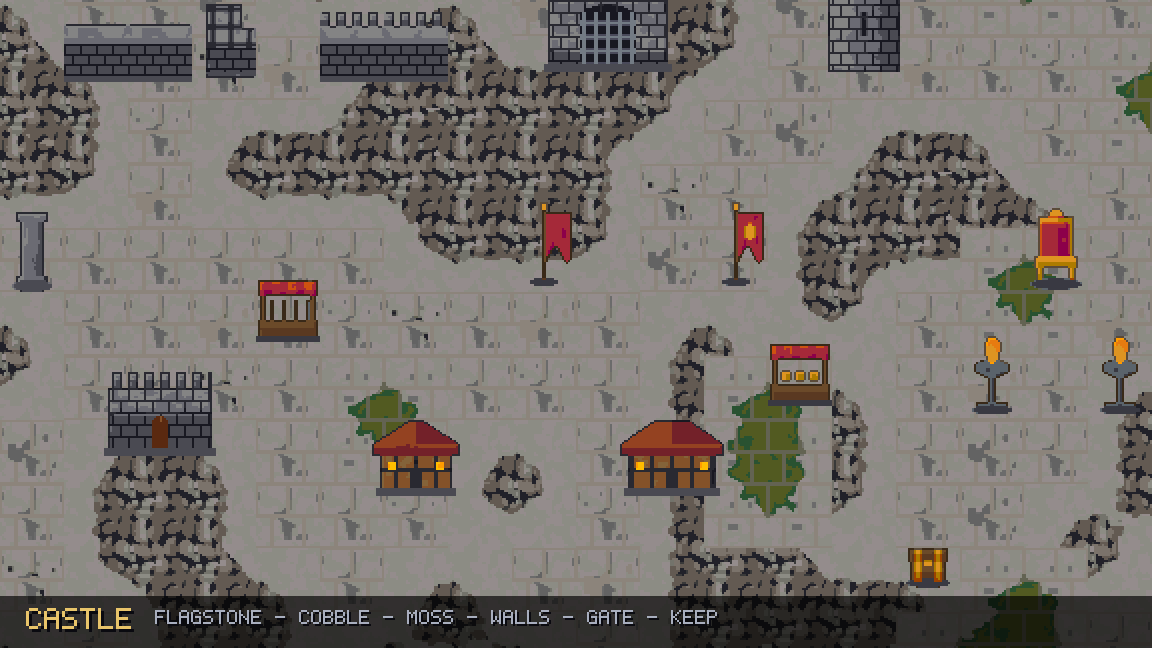
Four environments: field, castle, desert, coast. Twelve terrain
families, 115 props, one shared palette.
At a glance
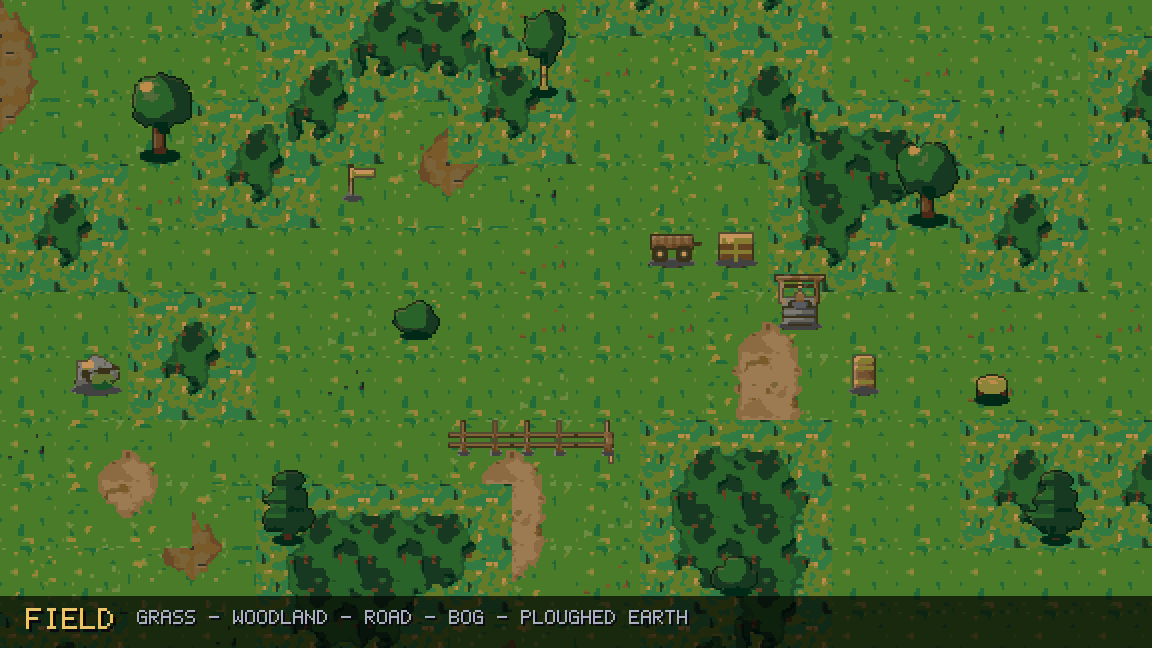
* 355 PNG files from 250 distinct designs, 32 x 32, orthogonal
* 240 terrain tiles - 12 corner-autotile families, 16 masks each, plus 48
inset variants
* 115 props from 58 designs - trees, walls, towers, gates, houses,
bridges, cliffs, chests, fences, fires
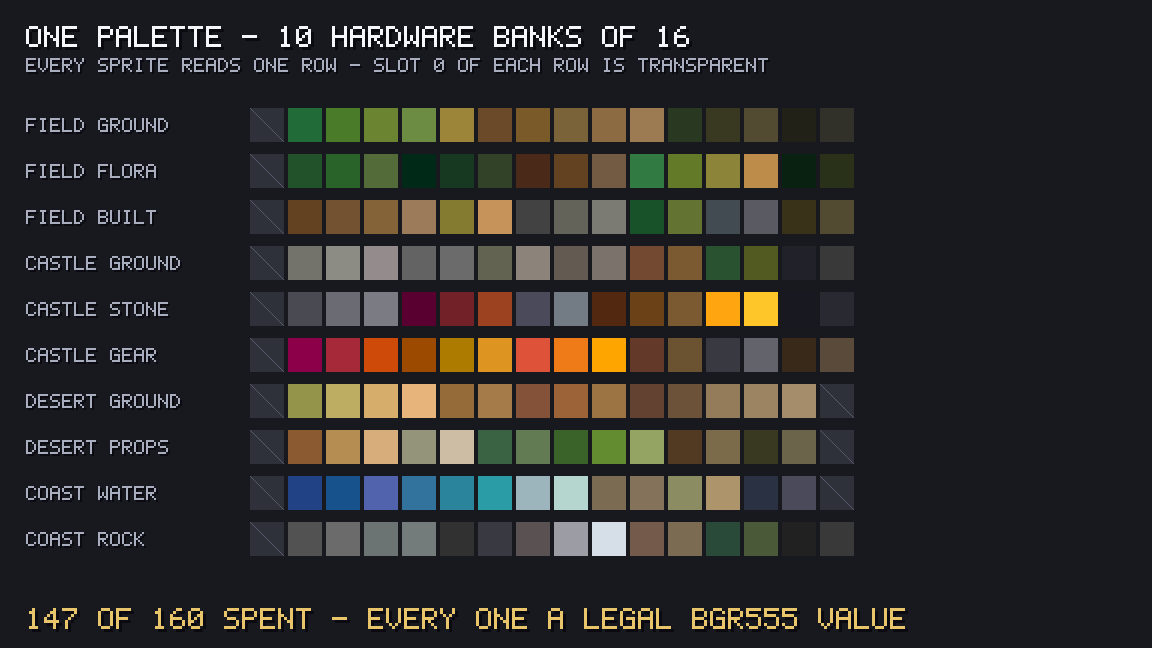
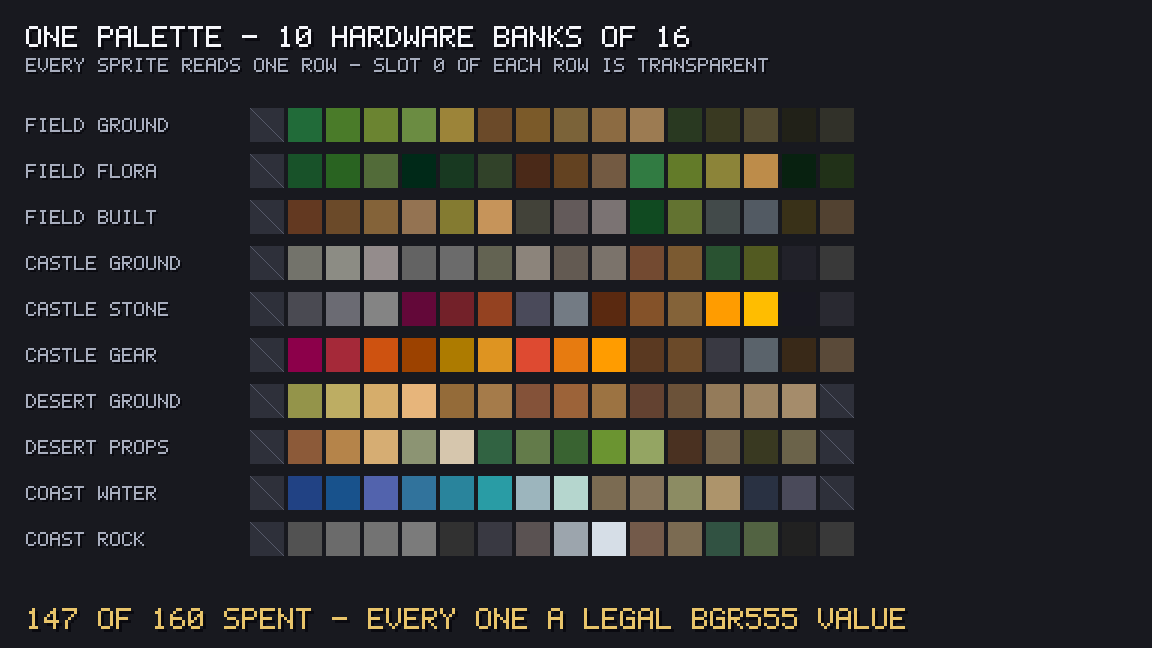
* One 147-colour palette in 10 hardware banks of 16; every sprite
reads exactly one bank
* 12 Tiled .tsx tilesets with corner wangsets, plus a demo .tmx map
* Indexed PNG-8 throughout, one transparent index, every colour a legal
BGR555 value
* Licence: unlimited personal and commercial use, no attribution required
How this compares
| a typical top-down tileset | Wardmarch | |
| Autotiling | 16 PNGs and a diagram; you rebuild the table | 12 .tsx files with the wangsets already written
|
| Seams | fixed by retouching, checked by eye | verified over all 512 legal tile arrangements |
| Palette | per-tile, drifts across the set | one 147-colour table, 10 banks, every file |
| Placement | align 115 props by hand | every prop ships its footprint anchor |
| Colour | whatever the editor produced | every entry a legal BGR555 value |
| Metadata | filenames | manifest.json with mask, corners, anchor, bank
|
| Variants | one tile per terrain | 48 inset variants, edge-safe by construction |
| Made by | often unstated | deterministic procedural code, no image model |
What's inside
| Terrain | 240 tiles - 12 corner-autotile families, 16 masks each, plus 48 inset variants |
| Props | 115 files from 58 designs - trees, walls, towers, gates, houses, bridges, cliffs, chests, fences, fires |
| Sheets | per-family grids + packed atlases, Aseprite-format JSON |
| Tiled | 12 .tsx tilesets with corner wangsets + a demo .tmx map
|
| Palette | .gpl, .hex, .png - 147 entries in 10 banks of 16
|
| Meta | manifest.json with corner masks, anchors and bank per asset
|
The three things that make it usable
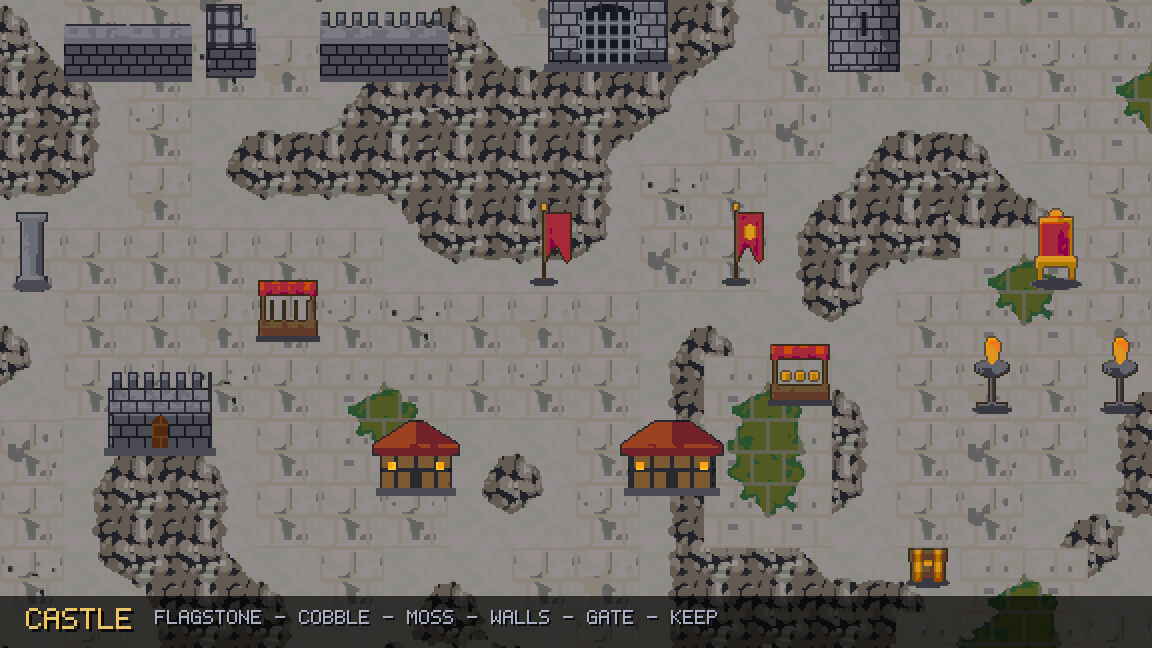
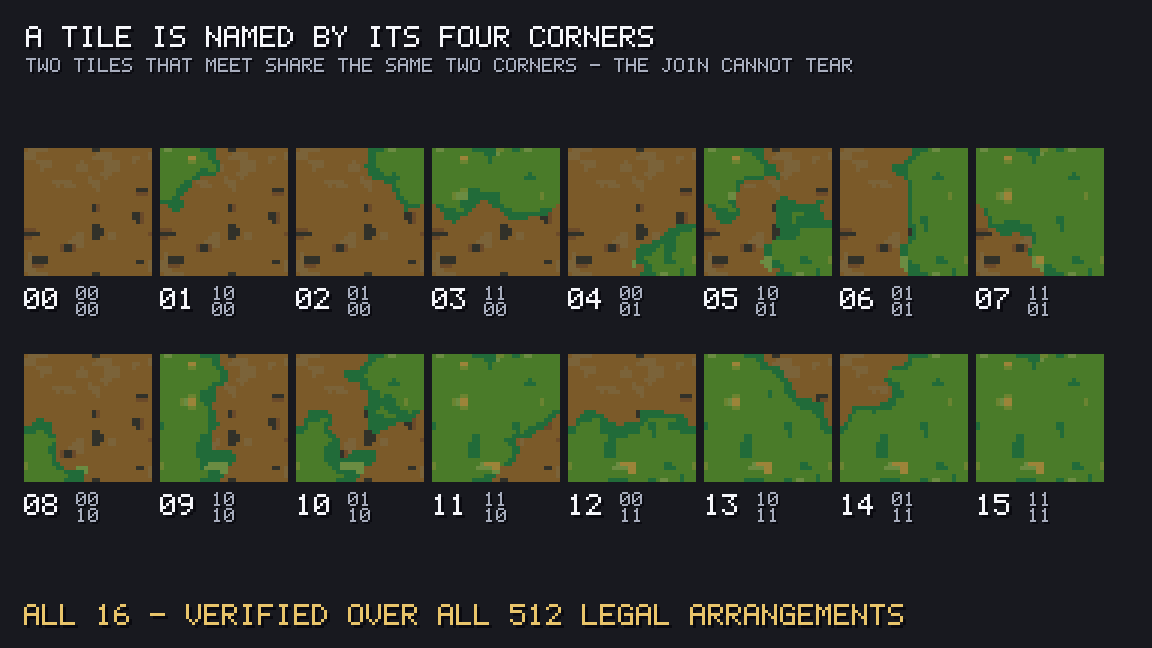
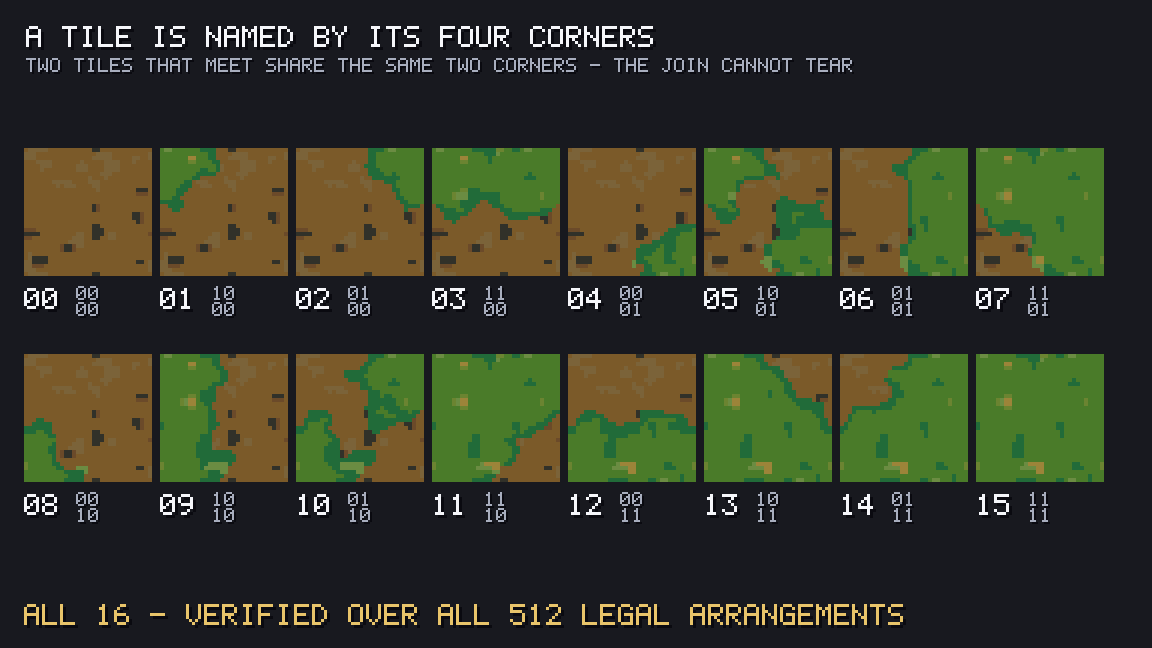
The terrain autotiles, and the .tsx proves it. Each family is
corner-identified: a tile is named by the terrain at its four corners, so two
neighbouring tiles share the same two corner values and the join *cannot* tear.
That is checked, not asserted - over all 512 arrangements the corner rule
permits, plus a seam measurement on every compatible pair. And it ships as
Tiled tilesets with the wangsets already written, so you pick the brush and
paint. Most packs hand you sixteen PNGs and let you rebuild that table by hand.
One palette, 147 colours, in 10 banks of 16. Real GBA background
hardware holds sixteen palette banks of sixteen entries. Every PNG here is
indexed PNG-8 carrying the whole table, and every individual sprite draws
from exactly one bank - so a tile *structurally cannot* use a colour it did
not pay for. Every entry is a legal BGR555 value, expanded the way the hardware
does it. That is why the set looks like one game instead of 355 good decisions.
Every prop ships its footprint anchor. meta/manifest.json gives, for each
sprite, the pixel at the centre of the tile it stands on - and the sheet JSONs
repeat it per frame. Place by that point and a 32x48 tree, a 64x80 tower and a
32x32 barrel dropped on the same cell simply agree. This is the number tilesets
usually forget; without it you align 355 sprites by hand.
Placing them in your engine
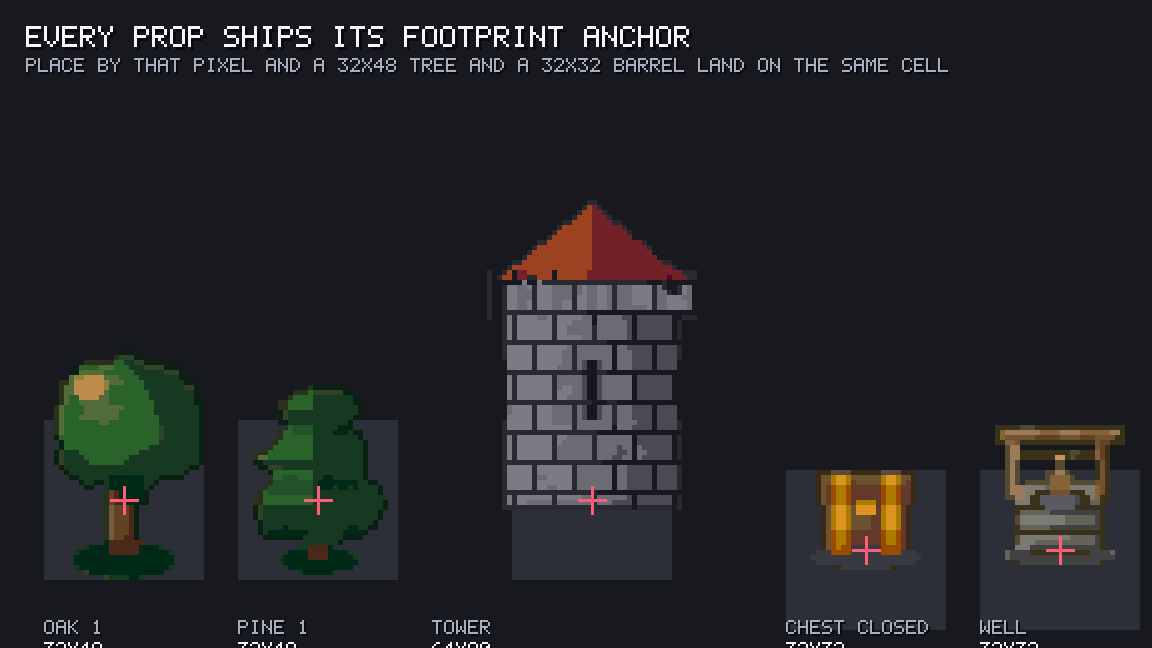
Orthogonal 32x32. Terrain is corner-identified, so the data grid is one larger
than the map in each direction and the drawn grid sits half a tile off it - the
standard dual-grid arrangement, and every .tsx declares the offset. Props
place by anchor:
screen_x = gx * 32 + 16 - anchor_x screen_y = gy * 32 + 16 - anchor_y
Draw terrain first, then props sorted by gy, so a near tree covers the base of
a far one.
Dropping it into your engine
The most common complaint about pixel art is that it "looks blurry", and it is
always one forgotten setting.
| Engine | Setting | Value |
| Unity | Filter Mode / Compression | Point (no filter) / None |
| Godot 4 | Project - Rendering - Textures - Default Filter | Nearest |
| Tiled | tile size | 32 x 32, orthogonal |
| Aseprite | - | opens indexed, palette intact |
| Phaser / Pixi | pixelArt: true / SCALE_MODES.NEAREST
|
Scale by whole numbers only. 2x, 3x, 4x - never 1.5x.
Who it is for, and who it is not for
Buy it if you are building a turn-based tactical RPG, a strategy or
roguelike map, or any top-down game on a 32x32 grid, and you want terrain that
autotiles the day you import it. It suits Tiled users best, because the
wangsets are already written; it suits Godot 4 and Unity equally well through
the sheets and the manifest.
Do not buy it if you need character sprites or combat animations - there
are none, this is terrain and scenery only. Nor if you need a side-on
platformer set, an isometric set, or 16x16 tiles: the grid is 32x32 throughout
and scaling pixel art by a fraction destroys it.
Compared with a typical top-down tileset, the difference is that the
autotiling is shipped rather than described. Most packs hand over sixteen PNGs
and a diagram; this one hands over 12 Tiled .tsx files with corner wangsets,
a demo .tmx map, and a manifest.json that gives every tile its corner mask
so an engine can derive the rule without a human retyping it.
Specifications
| Tile size | 32 x 32 pixels, orthogonal |
| Assets | 355 files from 250 distinct designs |
| Terrain | 240 tiles in 12 corner-autotile families |
| Props | 115 files from 58 designs |
| Palette | 147 colours in 10 banks of 16 |
| Colour depth | BGR555 - 5 bits per channel, 32 levels |
| File format | Indexed PNG-8, one transparent index |
| Autotile scheme | Corner-identified, 16 masks, dual-grid offset 0.5 |
| Editor support | Tiled 1.10 .tsx with corner wangsets, demo .tmx
|
| Sheet metadata | Aseprite-format JSON with per-frame anchor and bank |
| Licence | Commercial use allowed, resale of the assets not |
| Price | $6 |
Frequently asked questions
Does the terrain autotile? Yes. All 12 terrain families are
corner-identified, and they ship as Tiled .tsx tilesets with the corner
wangsets already written, so you pick a terrain brush and paint. The rule is
verified over all 512 arrangements the corner scheme permits - zero seams and
zero corner tears - rather than checked by eye.
What engines does it work with? Anything that reads PNG. Tiled opens the
.tsx files directly. Godot 4, Unity, GameMaker, Phaser, Pixi and LOVE all
import the sheets; set the texture filter to Nearest (Godot) or Point (Unity)
or the pixels blur. Import settings for each are listed above.
How big are the tiles? 32 x 32 pixels. Props are one tile wide where the
subject allows and up to 64 x 80 where it does not - a tower is 2 x 2 cells.
How many colours does it use? 147 across the whole pack, arranged as
10 banks of 16 the way GBA background hardware arranges them. Any single
sprite reads exactly one bank, so no tile uses more than 15 opaque colours.
Can I use it in a commercial game? Yes, in unlimited personal and
commercial projects, with no attribution required. You may not resell or
redistribute the assets themselves as an asset pack.
Is it AI-generated? No. Every pixel is produced by deterministic procedural
code - the same input builds the same file byte for byte. No image model was
used at any stage, and nothing is traced, scanned, or converted from any
existing game.
Can I get terrains that are not in the box? Yes, by layering rather than by
waiting for more art. Draw the lowest-priority terrain as a full fill and each
terrain above it as its own 16-mask shape; that is the same decomposition Godot
and Tiled use internally. Priorities for all 12 families are in
meta/manifest.json.
More from najjar320
Every pack below is built the same way - procedural code, a published palette,
measured numbers, no generative AI and no photo scans.
* [Silo Nine](https://najjar320.itch.io/silo-nine-isometric-tilese) - 437
isometric tiles, props and an 8-direction animated character, 64x32
* [Coriolis](https://najjar320.itch.io/coriolis-station-pack) - 100 sci-fi
station assets at 32x32, one 31-colour palette
* [Escapement](https://najjar320.itch.io/escapement-industrial-pixel-art) - 200
animated factory icons and a tileset at 32x32
* [Kingsteel](https://najjar320.itch.io/kingsteel-weapon-armor-icons) - 202
weapon and armour icons at native 32x32
* [Mintmark](https://najjar320.itch.io/mintmark-150-spinning-coin-sprites) -
150 spinning coin sprites, 25 designs in 6 metals
* [VISTA](https://najjar320.itch.io/vista-parallax-backgrounds) - 10 seamless
layered parallax backgrounds, free and CC0
Wardmarch shares no palette with any of them - it is a GBA-rules set and they
are not - but it is placed, documented and licensed the same way, so it drops
into the same project without a second pipeline.
Licence
Wardmarch v1.0.0 - (c) 2026 najjar320 - Use and modify in unlimited personal and commercial projects; do not resell or redistribute the assets themselves; attribution not required.
How the art was made
Every pixel is drawn by Boneglass, a procedural program that builds pixel
art from code instead of by hand. Run it twice and you get the same files, byte
for byte.
It works to the GBA's own colour rules: 16 colours to a bank, 5 bits per
channel, flat shading, no dithering.
No image model was used. Nothing here is traced, scanned, or taken from any
existing game.
Purchase
In order to download this asset pack you must purchase it at or above the minimum price of $3 USD. You will get access to the following files:
Development log
- new asset2 days ago
Leave a comment
Log in with itch.io to leave a comment.